Buzz Bingo Records Revenue Growth as Employment Costs Rise
Viktor Lange · Sep 8, 2026

Buzz Bingo Records Revenue Growth as Employment Costs Rise
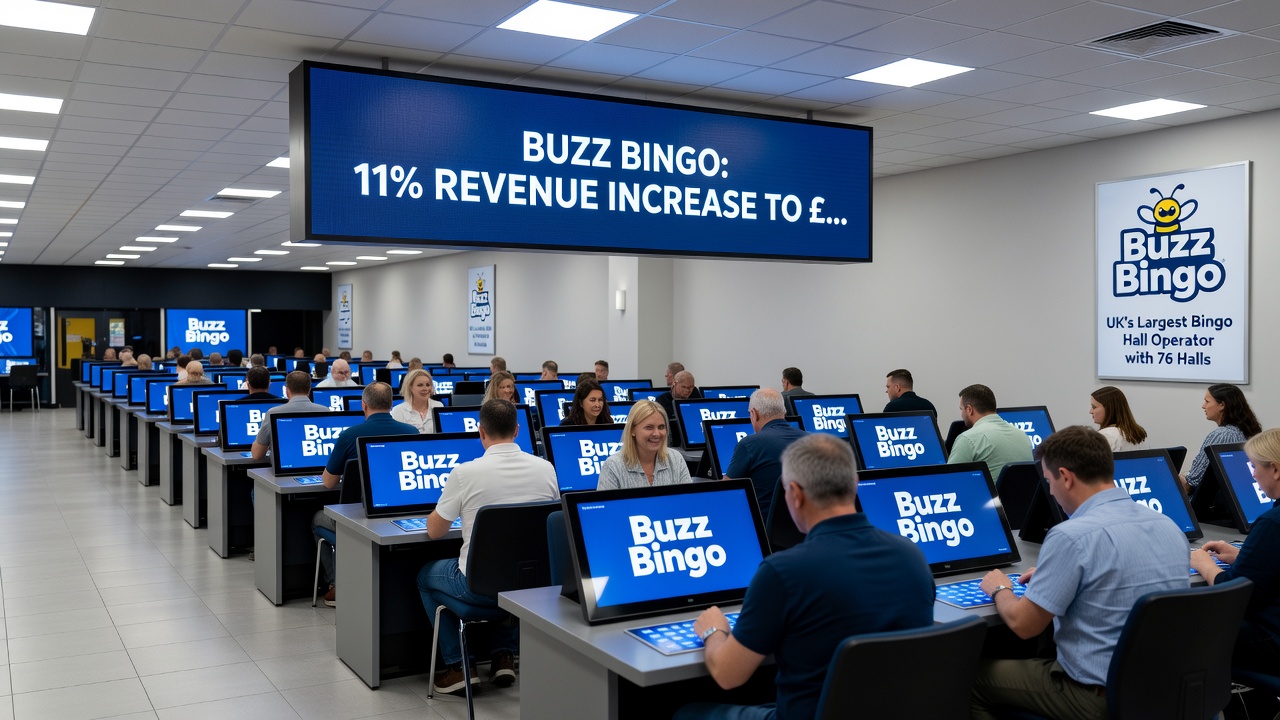
Buzz Bingo, which operates 76 halls across the UK as the country's largest bingo hall operator, posted an 11% revenue rise to £241m for the year ending January 2026; the results also showed player numbers climbing 8% at physical locations and 30% online, with much of that growth tied to increased participation from Gen Z and millennial demographics according to the company's internal figures.
Player Trends and Revenue Breakdown
Data from the period indicates that in-person attendance lifted overall hall activity while online platforms captured a sharper increase, and observers note that the combined channels produced steady top-line expansion even as the business managed multiple cost pressures simultaneously. The 76-hall network continued to draw traditional bingo enthusiasts alongside newer audiences, and figures reveal that younger players contributed measurably to both footfall and digital sessions throughout the 12 months.
Those who reviewed the accounts highlight that revenue reached £241m after the 11% advance, a result that reflects sustained demand across the estate; at the same time the operator recorded an 8% rise in physical players and a 30% jump in online users, patterns that align with broader shifts toward digital engagement among younger adults. Experts tracking the sector point out that Gen Z and millennial interest helped offset slower segments, allowing total income to advance despite external headwinds.
Cost Increases and Earnings Impact
Underlying earnings declined 6% to £39m as employer national insurance contributions and the national living wage both moved higher, and the company responded by slowing capital investment across its halls and digital platforms. The same set of accounts shows a larger pre-tax loss for the year, a development that stems directly from the elevated employment expenses rather than from any drop in customer activity.
Researchers who examined the results note that the combination of statutory wage and contribution changes created a measurable drag on profitability; the operator therefore adjusted its spending plans to preserve cash while maintaining core operations at the 76 sites. Data indicates the earnings reduction occurred even though revenue and player metrics moved in a positive direction, underscoring how fixed cost items can influence outcomes independently of sales growth.
Operational Adjustments and Future Periods
The group slowed investment in both physical upgrades and online enhancements during the year, a step taken after the earnings calculation incorporated the higher national insurance and living wage rates; observers note that such decisions typically affect refurbishment timelines and technology rollouts across multiple halls. Those reviewing the report also record that the pre-tax loss widened compared with the prior period, a change attributed solely to the employment cost increases rather than to revenue shortfalls.
Financial accounts for the year to January 2026 detail these movements in full, and the same documents show how the 11% revenue increase and dual-channel player gains coexisted with the 6% earnings dip. Industry analysts following the operator's filings point to the national insurance and wage adjustments as the primary drivers behind the investment slowdown and the expanded pre-tax loss.
Conclusion
The year-to-January 2026 results for Buzz Bingo therefore present a mixed picture in which revenue reached £241m and player counts advanced at both physical and online sites, yet underlying earnings fell to £39m and the pre-tax position deteriorated because of statutory employment cost rises. The operator's decision to moderate investment reflects those pressures, and the 76-hall network continues to operate under the same cost environment into subsequent reporting periods.